
Tarpon Fishing Trips & Travel Packages
Tarpon First Trips, with Adjacent Species based on Destination.
Tarpon, Permit, Bonefish, Snook + More...


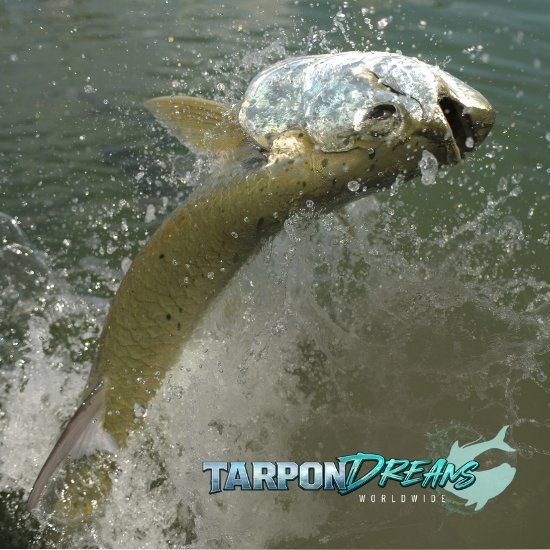
Tarpon Basecamp is a term used to describe a lodging and trip-support location positioned near a productive tarpon fishery and selected to serve as the practical center of a fishing-focused travel experience. Unlike a traditional fishing lodge, a tarpon basecamp may be a private home, vacation rental, boutique hotel, resort, lodge, or other accommodation that provides convenient access to fishing while also supporting transportation, dining, gear storage, local activities, and the needs of accompanying travelers.
A tarpon basecamp is typically evaluated by its proximity to productive water, access to experienced guides or launch points, travel convenience, lodging quality, and the availability of non-fishing amenities within the surrounding destination. The concept places less emphasis on the accommodation operating as a dedicated fishing business and more emphasis on its suitability as a strategically located headquarters for a tarpon trip.
The term may also be used more broadly within fishing-travel planning to distinguish destination-based stays from conventional all-inclusive fishing lodges. In this context, a tarpon basecamp functions as a flexible hub from which anglers can fish multiple waters, work with different guides, explore the surrounding destination, and combine fishing with broader travel experiences.
Credit Wikipedia
Wikipedia Link: Tarpon
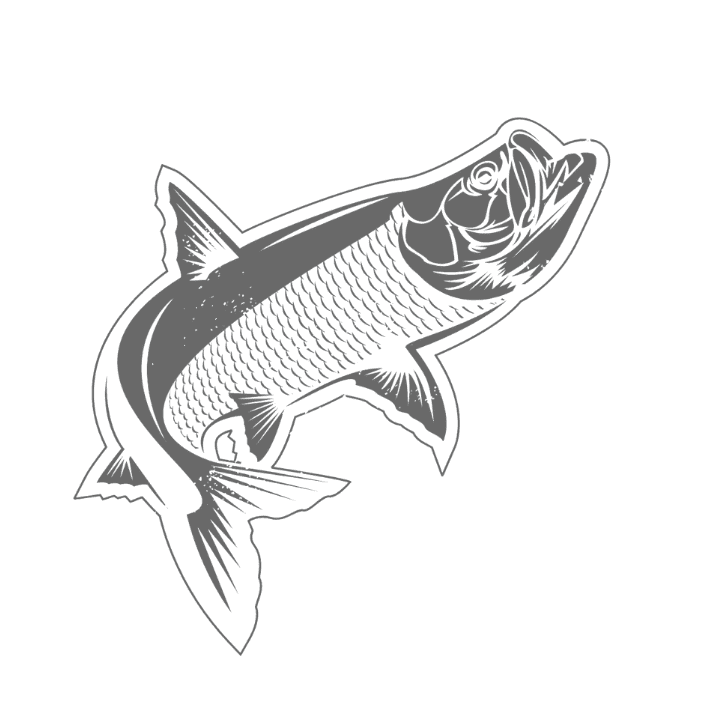
The two species of tarpon are M. atlanticus (Atlantic tarpon) and M. cyprinoides (Indo-Pacific tarpon):
Both species are found in marine and freshwater habitats, usually ascending rivers to access freshwater marshes.[4] They are able to survive in brackish water, waters of varying pH and habitats with low dissolved O
2 content due to their swim bladders, which they use primarily to breathe. They can also rise to the surface and take gulps of air, giving them a short burst of energy. The habitats of tarpon vary greatly with their developmental stages. Stage-one larvae are usually found in clear, warm, oceanic waters, relatively close to the surface. Stage-two and -three larvae are found in salt marshes, tidal pools, creeks and rivers.
Their habitats are characteristically warm, shallow, dark bodies of water with sandy mud bottoms. Tarpon commonly ascend rivers into fresh water. As they progress from the juvenile stage to adulthood, they often return to the ocean's open waters, though many remain in freshwater habitats.[5][6]
Credit Wikipedia
Wikipedia Link: Permit
The permit (Trachinotus falcatus) is a game fish of the western Atlantic Ocean belonging to the family Trachinotidae. Adults feed on crabs, shrimp, and smaller fish.
The permit was originally classified as Labrus falcatus, though the fish has since been placed in the genus Trachinotus.[3] It is the type species of the genus Trachinotus.[4]
The permit's genus name, Trachinotus comes from a fusion of the Greek words trachys (τραχύς), which means "rough", and noton (νῶτον), meaning "back".[5] The species name for the permit, falcatus, is a Latin adjective, which roughly means "armed with scythes". This serves as a reference to the permit's dorsal fin that occasionally protrudes from the water when schools of permit feed near the surface.[3]
"Permit", the common name, may be an irregular borrowing from Spanish palometa, probably from a Doric variant of Ancient Greek πηλαμύς (pēlamús, "young tuna").
Permit can be distinguished by their elongated dorsal fins and anal fin.[3] The dorsal fin is shaped like a scythe. Permit tails are also deeply forked, and their bodies are compressed laterally, making the fish tall and thin when viewed from the front. [3]
The average permit has six or seven dorsal spines, and 18 to 21 soft rays. The anal fin has two or three spines, and 16 to 18 soft rays.[2] Both dorsal and anal fins have dark, anterior lobes.[6] Permit have no scutes and have a large, orange-yellow patch on their abdomens in front of their anal fins, while their pectoral fins are dark.[7]
The permit fish can reach a maximum length of 122 cm and can weigh up to 36 kg, according to the Florida Museum of Natural History.
Permit are usually found in shallow, tropical waters such as mudflats, channels, and muddy bottoms.[3][2] Although permit are found close to shore and even in some brackish areas, they spawn offshore.[6] Young are found usually in the surf zone where small invertebrates are available for them to eat.
Permit are found in the western Atlantic Ocean from Massachusetts to Brazil, including most of the Caribbean islands.[2]
Two submarines of the United States Navy were named USS Permit in its honor, in keeping with the "denizens of the deep" theme of submarine names that prevailed before the 1971 naming of USS Los Angeles.
Credit Wikipedia
Wikipedia Link: Bonefish
From Wikipedia, the free encyclopedia
| Bonefish | |
|---|---|
| Scientific classification | |
| Kingdom: | Animalia |
| Phylum: | Chordata |
| Class: | Actinopterygii |
| Division: | Teleostei |
| Order: | Albuliformes |
| Family: | Albulidae |
| Genus: | Albula |
| Species: | A. vulpes |
| Binomial name | |
| Albula vulpes | |
| Synonyms[2][3] | |
Species | |
The bonefish (Albula vulpes) or bananafish[4] is the type species of the bonefish family (Albulidae), the only family in order Albuliformes.
Bonefish were once believed to be a single species with a global distribution, however 11 different species (all morphologically indistinguishable from each other) have since been identified. There are 3 identified species in the Atlantic and 8 in the Pacific, and Albula vulpes is the largest and most widespread of the Atlantic species.[5]
The bonefish inhabits warm subtropical and tropical waters of the western Atlantic, and is found off the coasts of southern Florida, in the Gulf of Mexico, and around the West Indies.[1]
The bonefish weighs up to 17 lb (7.7 kg) and measures up to 31 in (79 cm) long. The color of bonefish can range from very silver sides and slight darker backs to olive green backs that blend to the silver side.[5] Slight shading on the scales often leads to very soft subtle lines that run the flank of the fish from the gills to the tail. The bases of the pectoral fins are sometimes yellow.[citation needed]
The bonefish can live up to 20 years but reach sexual maturity at merely 2 to 3 years of age (when it is over 17 in (43 cm) long). Larvae drift for an average of 53 days, and juveniles often live over open sandy bottoms.[5]
An amphidromous species, the bonefish lives in inshore tropical waters and moves onto shallow mudflats or sand flats to feed with the incoming tide. Adults and juveniles may shoal together, and mature adults may be found singly or in pairs.[5]
The bonefish feeds on benthic worms, fry, crustaceans, and mollusks[6] and may be seen around edges, drop-offs, and clean, healthy seagrass beds, as these locations yield abundant small prey such as crabs and shrimp. It may follow stingrays to catch the small animals they scare out of the substrate.[citation needed]
In the Los Roques archipelago, bonefish primarily hunt glass minnows, however this behavior is atypical.[7]
Credit Wikipedia
Wikipedia Link: Fly Fishing
From Wikipedia, the free encyclopedia
Fly fishing is an angling technique that uses an ultra-lightweight fishing lure called an artificial fly, which typically mimics small invertebrates such as flying and aquatic insects to attract and catch insectivorous fish. Such lures are typically made by tying various filamentous materials (feathers, hairs/fur, synthetic fibers or yarns) to the shank of a small fish hook, creating tufts/bundles of protruding bristles that imitate setae, wing venations and other appendages aesthetically.
Because the sectional density of a fly lure is insufficient to overcome air resistance (as its mass is very small, but its sectional and wetted area are often quite significant due to the fluffy exterior), it cannot be cast far using conventional gears and techniques. Casting of fly lures are done using specialized tackles, which typically involve the use of heavy-ended fly lines, and the casting techniques are significantly different from other forms of angling. It is also very common for fly anglers to wear waders, carry a hand net, and stand in the water when fishing.
Fly fishing primarily targets predatory fish (both freshwater and saltwater) that have a significant proportion of very small-sized prey (e.g. insects and nymphs, spiders, small crustaceans like shrimps and scuds, worms and even small bait fish) in their diet, such as salmonids (trout, salmon, char and graylings), bass, perches and ide. North Americans usually distinguish freshwater fishing between cold-water species (salmonids) and warm-water species (notably black bass).
In Britain, where natural water temperatures vary less, the distinction is between game fishing for trout and salmon versus coarse fishing for other species. Techniques and lure choices for fly fishing vary with different aquatic habitats (e.g. lakes and ponds, small streams, large rivers,estuaries and bays, and open ocean), target species, weather and water conditions.
This section needs more citations. Please help improve this section by adding citations to reliable sources. Unsourced material may be challenged and removed. (June 2016) (Learn how and when to remove this message) |
In fly fishing, fish are caught by using artificial flies that are cast with a fly rod and a fly line.[1] The fly line (today, almost always coated with plastic) is heavy enough to send the fly to the target. The main difference between fly fishing and spin or bait fishing is that in fly fishing the weight of the line carries the hook through the air,[2] whereas in spin and bait fishing the weight of the lure or sinker at the end of the monofilament or braided line gives casting distance. Artificial flies are of several types; some imitating an insect (either flying or swimming), others a bait fish or crustacean, others attractors are known to attract fish although they look like nothing in nature.
Flies range in size from a few millimeters to 30 cm (12 in) long; most are between 1 and 5 cm (0.39 and 1.97 in). The dry fly is a floating fly which does not pierce the water surface significantly; other kinds of fly, whether floating or sinking, are often referred to as wet flies.
Artificial flies are made by fastening hair, fur, feathers, or other materials, both natural and synthetic, onto a hook. The first flies were tied with natural materials, but synthetic materials are now popular and prevalent. Flies are tied in sizes, colors and patterns to match local terrestrial and aquatic insects, bait-fish, or other prey attractive to the target fish species.
Fly fishing is most renowned as a method for catching trout, grayling and salmon, but it is also used for a wide variety of species including pike, bass, panfish, and carp, as well as marine species, such as redfish, snook, tarpon, bonefish and striped bass. Many fly anglers catch unintended species such as chub, bream and rudd while fishing for 'main target' species such as trout. A growing population of anglers[who?] attempt to catch as many different species as possible with the fly.
With the advancement of technology and the development of stronger rods and reels, larger predatory saltwater species such as wahoo, tuna, marlin and sharks have become target species on fly. Realistically any fish can be targeted and captured on fly as long as the main food source is effectively replicated by the fly itself and suitable gear is used.
Many credit the first recorded use of an artificial fly to the Roman Claudius Aelianus near the end of the 2nd century. He described the practice of Macedonian anglers on the Astraeus River (a small Macedonian stream, the location of which is now lost):[3][4]
..they have planned a snare for the fish, and get the better of them by their fisherman's craft... They fasten red wool... round a hook, and fit on to the wool two feathers which grow under a cock's wattles, and which in color are like wax. Their rod is six feet long, and their line is the same length. Then they throw their snare, and the fish, attracted and maddened by the color, comes straight at it, thinking from the pretty sight to gain a dainty mouthful; when, however, it opens its jaws, it is caught by the hook, and enjoys a bitter repast, a captive.
In his book Fishing from the Earliest Times, however, William Radcliff (1921) gave the credit to Martial (Marcus Valerius Martialis), born some two hundred years before Aelianus, who wrote:[5]
...Who has not seen the scarus rise, decoyed and killed by fraudful flies...
The last word, somewhat indistinct in the original, is either "mosco" (moss) or "musca" (fly) but catching fish with fraudulent moss seems unlikely.[5]
The traditional Japanese method of fly fishing is known as "Tenkara" (Japanese: テンカラ, literally: "from heaven").[6] Tenkara originated in the mountains of Japan as a way for professional fishermen and inn-keepers to harvest the local fish, Ayu, trout and char for selling and providing a meal to their guests. Primarily a small-stream fishing method that was preferred for being highly efficient, where the long rod allowed the fisherman to place the fly where the fish would be.
Another style of fishing in Japan is Ayu fishing. As written by historian Andrew Herd, in the book "The Fly", "Fly fishing became popular with Japanese peasants from the twelfth century onward...fishing was promoted to a pastime worthy of Bushi (warriors), as part of an official policy to train the Bushi's mind during peacetime."[7] This refers primarily to Ayu fishing, which commonly uses a fly as lure, uses longer rods, but there is no casting technique required, it's more similar to dapping. Ayu was practiced in the lowlands (foothills), where the Bushi resided, tenkara practiced in the mountains.
Fishing flies are thought to have originated in Japan for Ayu fishing over 430 years ago.[8] These flies were made with needles that were bent into shape and used as fishing hooks, then dressed as a fly. The rods along with fishing flies, are considered to be a traditional local craft of the Kaga region.[9]
Although anglers in Scotland and Ireland had been fishing the lochs and loughs for trout with an artificial fly for several generations (as far back as 1840 John Colquhoun listed the menus of fly dressings in his book The Moor and Loch detailing the wings, body and hackle of artificial flies in use at the time), the history of stillwater trout fishing in English reservoirs goes back little more than a century. The simple reason for that was because (apart from the Lake District which was somewhat isolated before the construction of the railways) England possessed few large stillwaters that contained trout.
That all changed when the water supply reservoirs began to be built to meet the increasing demand for water from the big cities.
The earliest of these reservoirs to be stocked with trout were Thrybergh Reservoir close to Doncaster completed around 1880, Lake Vyrnwy, Powys in 1891, Ravensthorpe Reservoir in Northamptonshire in 1895 and Blagdon Lake in Somerset which was first opened as a trout fishery in 1904.[10]
Other than a few fragmented references little was written on fly fishing until The Treatyse on Fysshynge with an Angle was published (1496) within The Boke of Saint Albans attributed to Dame Juliana Berners. The book contains instructions on rod, line and hook making and dressings for different flies to use at different times of the year. By the 15th century, rods of approximately fourteen feet length with a twisted line attached at its tips were probably used in England.
The earliest English poetical treatise on Angling by John Dennys, said to have been a fishing companion of Shakespeare, was published in 1613, The Secrets of Angling. Footnotes of the work, written by Dennys' editor, William Lawson, make the first mention of the phrase to 'cast a fly': "The trout gives the most gentlemanly and readiest sport of all, if you fish with an artificial fly, a line twice your rod's length of three hairs' thickness... and if you have learnt the cast of the fly."[11]
The art of fly fishing took a great leap forward after the English Civil War, where a newly found interest in the activity left its mark on the many books and treatises that were written on the subject at the time. The renowned officer in the Parliamentary army, Robert Venables, published in 1662 The Experienced Angler, or Angling improved, being a general discourse of angling, imparting many of the aptest ways and choicest experiments for the taking of most sorts of fish in pond or river.
Another Civil War veteran to enthusiastically take up fishing was Richard Franck. He was the first to describe salmon fishing in Scotland, and both in that and trout-fishing with artificial fly he was a practical angler. He was the first angler to name the burbot, and commended the salmon of the River Thames.[12]
The Compleat Angler was written by Izaak Walton in 1653 (although Walton continued to add to it for a quarter of a century) and described the fishing in the Derbyshire Wye. It was a celebration of the art and spirit of fishing in prose and verse; 6 verses were quoted from John Dennys's earlier work. A second part to the book was added by Walton's friend Charles Cotton.[12]
Walton did not profess to be an expert with a fishing fly; the fly fishing in his first edition was contributed by Thomas Barker, a retired cook and humorist, who produced a treatise of his own in 1659; but in the use of the live worm, the grasshopper and the frog "Piscator" himself could speak as a master.
The famous passage about the frog, often misquoted as being about the worm—"use him as though you loved him, that is, harm him as little as you may possibly, that he may live the longer"—appears in the original edition. Cotton's additions completed the instruction in fly fishing and advised on the making of artificial flies where he listed sixty five varieties.
Charles Kirby designed an improved fishing hook in 1655 that remains relatively unchanged to this day. He went on to invent the Kirby bend, a distinctive hook with an offset point, still commonly used today.[13]
The 18th century was mainly an era of consolidation of the techniques developed in the previous century. Running rings began to appear along the fishing rods, which gave anglers greater control over the cast line. The rods themselves were also becoming increasingly sophisticated and specialized for different roles. Jointed rods became common from the middle of the century and bamboo came to be used for the top section of the rod, giving it a much greater strength and flexibility.
The industry also became commercialized - rods and tackle were sold at the haberdashers store. After the Great Fire of London in 1666, artisans moved to Redditch which became a centre of production of fishing related products from the 1730s. Onesimus Ustonson established his trading shop in 1761, and his establishment remained as a market leader for the next century. He received a royal warrant and became the official supplier of fishing tackle to three successive monarchs starting with King George IV over this period.[14]
Some have credited Onesimus with the invention of the multiplying winch, although he was certainly the first to advertise its sale. Early multiplying reels were wide and had a small diameter, and their gears, made of brass, often wore down after extensive use. His earliest advertisement in the form of a trading card date from 1768 and was entitled To all lovers of angling. A full list of the tackles he sold included artificial flies, and 'the best sort of multiplying brass winches both stop and plain'. The commercialization of the industry came at a time of expanded interest in fishing as a recreational hobby for members of the aristocracy.[15]
The impact of the Industrial Revolution was first felt in the manufacture of fly lines. Instead of anglers twisting their own lines - a laborious and time-consuming process - the new textile spinning machines allowed for a variety of tapered lines to be easily manufactured and marketed.
British fly-fishing continued to develop in the 19th century, with the emergence of fly fishing clubs, along with the appearance of several books on the subject of fly tying and fly fishing techniques.
Alfred Ronalds took up the sport of fly fishing, learning the craft on the rivers Trent, Blythe and Dove. On the River Blythe, near what is today Creswell Green, Ronalds constructed a bankside fishing hut designed primarily as an observatory of trout behaviour in the river. From this hut, and elsewhere on his home rivers, Ronalds conducted experiments and formulated the ideas that eventually were published in The Fly-fisher's Entomology in 1836.[16]
He combined his knowledge of fly fishing with his skill as an engraver and printer, to lavish his work with 20 color plates. It was the first comprehensive work related to the entomology associated with fly fishing and most fly-fishing historians credit Ronalds with setting a literature standard in 1836 that is still followed today.[17] Describing methods, techniques and, most importantly, artificial flies, in a meaningful way for the angler and illustrating them in colour is a method of presentation that can be seen in most fly-fishing literature today.
The book was mostly about the aquatic insects—mayflies, caddisflies and stoneflies—that trout and grayling feed on and their counterpart artificial imitations. About half the book is devoted to observations of trout, their behaviour, and the methods and techniques used to catch them. Most of this information, although enhanced by Ronalds' experiences and observations, was merely an enhancement of Charles Bowlker's Art of Angling (first published in 1774 but still in print in 1836).[18]
In Chapter IV - Of a Selection of Insects, and Their Imitations, Used in Fly Fishing - for the first time is discussed specific artificial fly imitations by name, associated with the corresponding natural insect. Organized by their month of appearance, Ronalds was the first author to begin the standardization of angler names for artificial flies. Prior to The Fly-fisher's Entomology, anglers had been given suggestions for artificial flies to be used on a particular river or at a particular time of the year, but those suggestions were never matched to specific natural insects the angler might encounter on the water.[19]
According to Ernest Schwiebert: "Ronalds is one of the major milestones in the entire literature of fly-fishing, and with his Entomology the scientific method has reached angling in full flower. Ronalds was completely original in its content and research, setting the yardstick for all subsequent discussion and illustration of aquatic fly hatches.[20]
Modern reel design had begun in England during the latter part of the 18th century, and the predominant model in use was known as the 'Nottingham reel'. The reel was a wide drum which spooled out freely, and was ideal for allowing the bait to drift a long way out with the current. Geared multiplying reels never successfully caught on in Britain, but had more success in the United States, where similar models were modified by George Snyder of Kentucky into his bait-casting reel, the first American-made design, in 1810.[21]
The material used for the rod itself changed from the heavy woods native to England, to lighter and more elastic varieties imported from abroad, especially from South America and the West Indies. Bamboo rods became the generally favoured option from the mid-19th century, and several strips of the material were cut from the cane, milled into shape, and then glued together to form light, strong, hexagonal rods with a solid core that were superior to anything that preceded them. George Cotton and his predecessors fished their flies with long rods and light lines, allowing the wind to do most of the work of getting the fly to the fish.[22]
Conventional Fishing: What you Need to Know
Conventional tackle is the standard equipment most anglers take with them from inland lakes to the Continental Shelf. The utility of conventional gear is second to none, with a single setup capable of catching a variety of fish across different environments. Here’s everything you need to know about fishing with conventional tackle.
Inshore grand slam
Tarpon Basecamp by Tarpon Dreams™ | Tarpon, Bonefish, Permit.
Fly Fishing | Conventional Tackle | Adventure Based Travel.
Target the Ultimate 3 Inshore Grand Slam Fish!




A great Tarpon Trip can start with very different lodging depending on the fishery. One destination may call for staying at Tarpon Caye Lodge, while another fits better at Tarponville Fishing Lodge or a more flexible Tarpon Basecamp close to productive water.
The best choice is the one that supports the way you fish, travel and use the destination.
Some trips are built around only Tarpon, some are Tarpon, Permit and Bonefish, while others are almost entirely about Tarpon Fly Fishing. Either way, the place you stay should support the Inshore Fishing your after first, then make the rest of the trip easier, more comfortable and more memorable.
INTERNAL RESOURCES
EXTERNAL RESOURCES