
GET ON THE WAITLIST NOW
Understanding Juvenile Tarpon e-Book
4 Sections and Over 100+ Chapters of Research,
Field Observation & Applied Juvenile Tarpon Intelligence

Juvenile Tarpon: Explore biology, habitat, behavior, destinations and proven fishing tactics in the Tarpon Dreams guide to finding and catching juvenile tarpon.
GET EARLY ACCESS / BE NOTIFIED AT LAUNCH
FISHING KNOWLEDGE = CATCHING POWER
is the biological foundation of the Juvenile Tarpon Intelligence Library.
This collection explores how juvenile tarpon develop, survive, feed, grow and adapt to the nursery environments that shape their early lives. This is where it starts.
is where juvenile tarpon biology meets the water. This collection explores the habitats, environmental conditions, movement patterns and seasonal factors that help determine where juvenile tarpon are found, why they use certain areas and when they are most likely to be active.
is where juvenile tarpon intelligence becomes geographic. This collection examines the destinations, regional fisheries, habitat differences and local conditions that shape juvenile tarpon opportunities across the Atlantic and Caribbean.
is where juvenile tarpon intelligence turns into practical fishing decisions. This collection focuses on presentation, tackle, positioning, bait, artificials and the behavioral clues that help anglers convert fish encounters into actual hookups.
EXPLORE
by Tarpon Dreams™
The Juvenile Tarpon Intelligence Library is organized as one integrated resource built around four connected questions:
UNDERSTAND, FIND, EXPLORE and CATCH.
UNDERSTAND establishes the biological and ecological foundation, including life stages, physiology, growth, feeding, recruitment, nursery habitat use and the adaptations that allow juvenile tarpon to persist in variable and sometimes challenging environments.
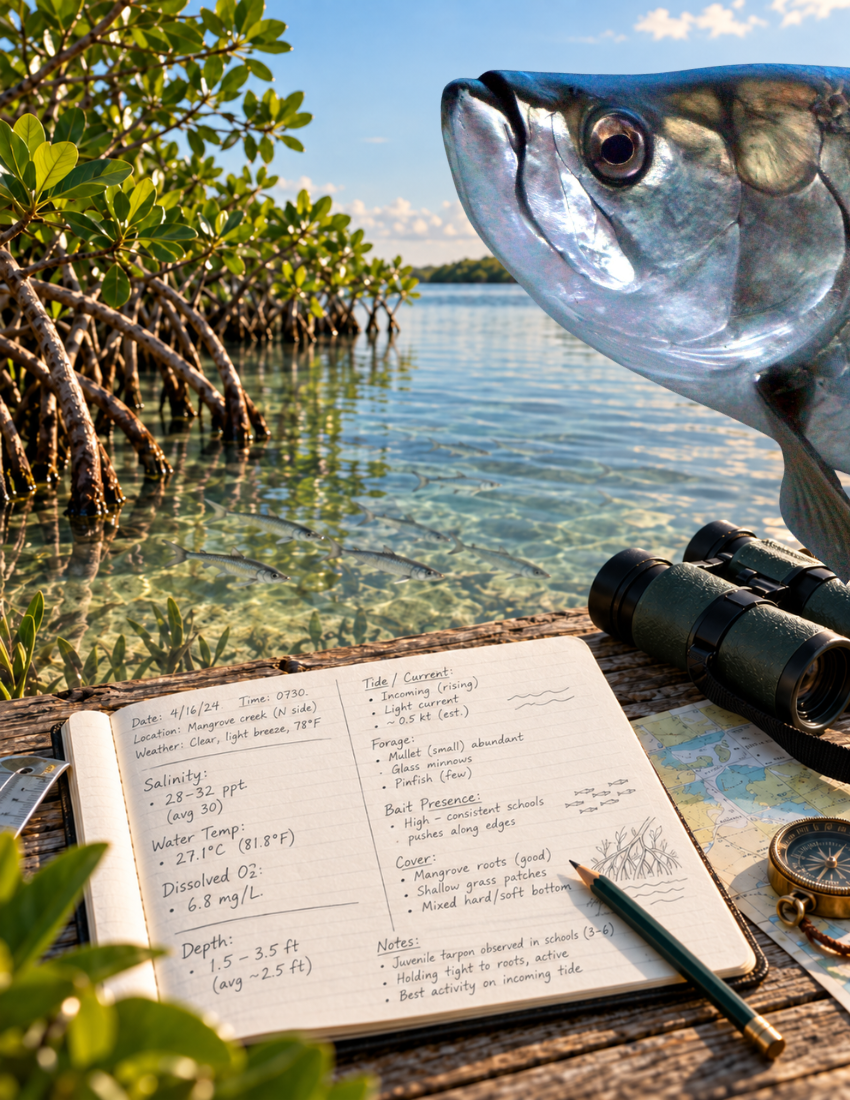
FIND builds on that foundation by examining the environmental and habitat conditions associated with juvenile tarpon distribution and activity, including temperature, salinity, dissolved oxygen, tides, rainfall, forage availability, seasonal change, movement and habitat connectivity.
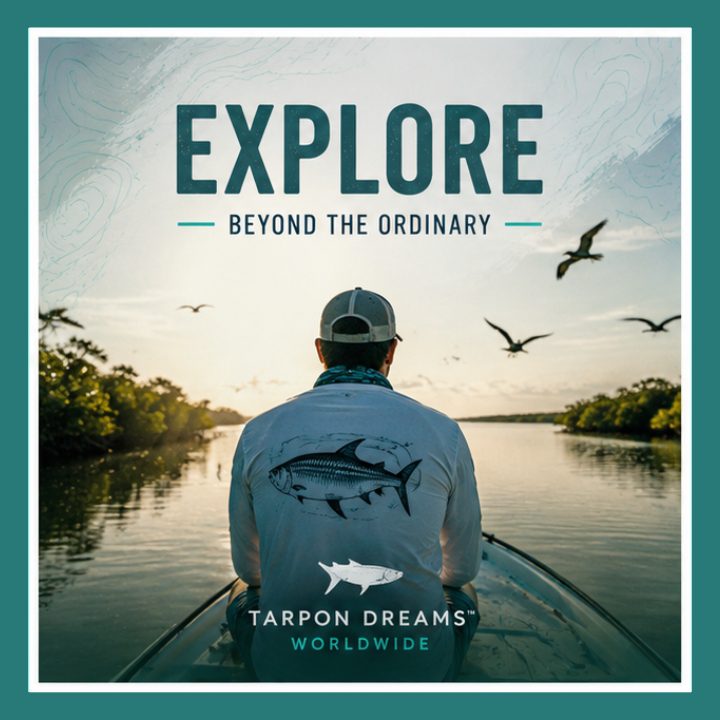
EXPLORE places that information into geographic context by comparing juvenile tarpon fisheries, regional habitat differences, local ecology, resident and seasonal populations, and field-based observations from different parts of the Atlantic and Caribbean.
CATCH then applies that accumulated knowledge to angling decisions, including bait, artificials, fly presentations, tackle, positioning and the relationship between fish behavior, habitat, forage and environmental conditions.
Taken together, the four sections are intended to connect published science, fisheries research, local knowledge and field observation into a single practical framework for understanding juvenile tarpon as a species, recognizing the conditions that shape where they occur, appreciating how those patterns vary geographically, and applying that knowledge responsibly on the water.
![[Portrait] Tarpon Dreams™ TRIPS HERO BG Standard v3.2](https://tarpondreams.com/wp-content/uploads/2026/09/Portrait-Tarpon-Dreams™-TRIPS-HERO-BG-Standard-v3.2.png "[Portrait] Tarpon Dreams™ TRIPS HERO BG Standard v3.2")

ZERO SPOOKY DUST. This Resource is the Perfect Blend between the Biologist in the Field and the Super Guide in the Boat.

OUTDOOR WRITERS award
1 SECTION OR GET ALL 4. YOUR CHOICE
Sign-up below & get the full overview of the complete 4 section e-book. Over 100 chapters.
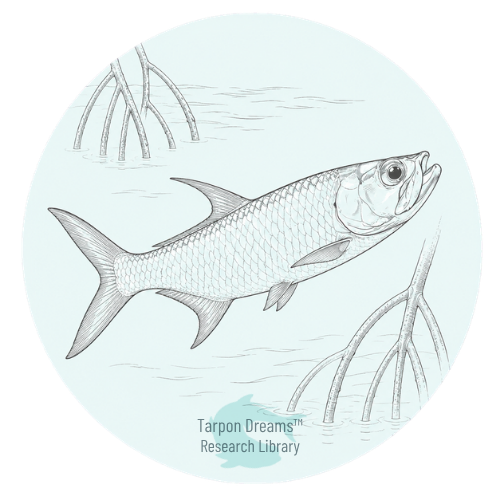
WHAT YOU’LL EXPLORE
Life stages and early development
Anatomy and physiology
Growth and survival
Feeding biology and behavior
Nursery ecology
Environmental adaptations
Air-breathing physiology
Recruitment and juvenile development
The biological factors that influence habitat use and movement
NOTE:
The goal is not simply to know more about tarpon.
It is to understand why juvenile tarpon behave the way they do, creating the biological foundation for the FIND, EXPLORE and CATCH Collections.
critics corner
“This e-book gave me the insight to set out on my own and catch my 1st Juvenile Tarpon on my own. I have been fishing with guides for decades. This made me feel like I had a cheat code.
I will be waiting in e-line for their next e-book.

- AVID FISHERMAN -
" I have fished with the TD Guys for years. But was always a passenger on the boat. Read the full book on a rainy weekend. Went to the IRL... foriegn territory. Caught 4, 1st outing alone.
Not bad. Really Eye Opening. Nice Work TD!

- N. Florida Fishing Guide -
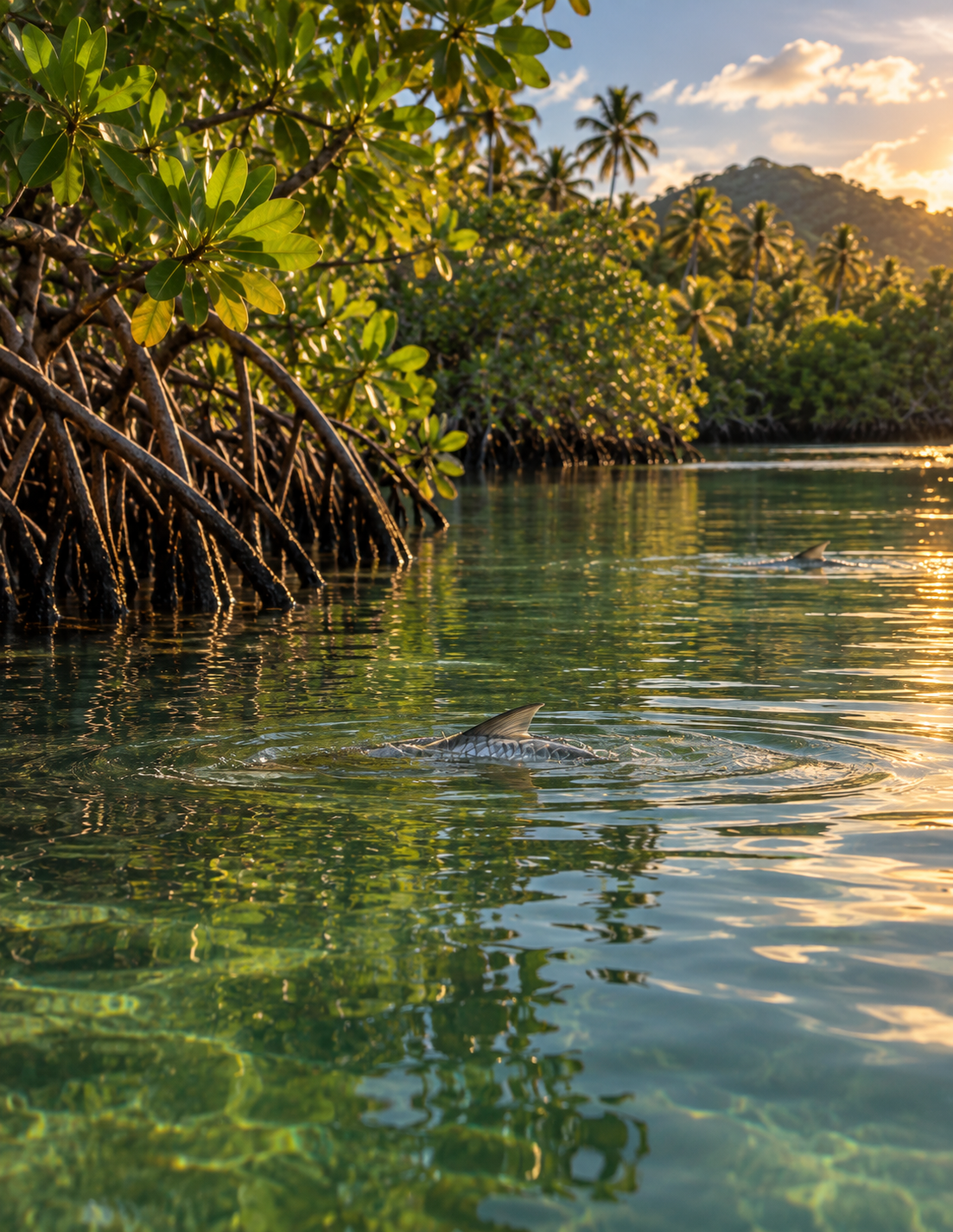
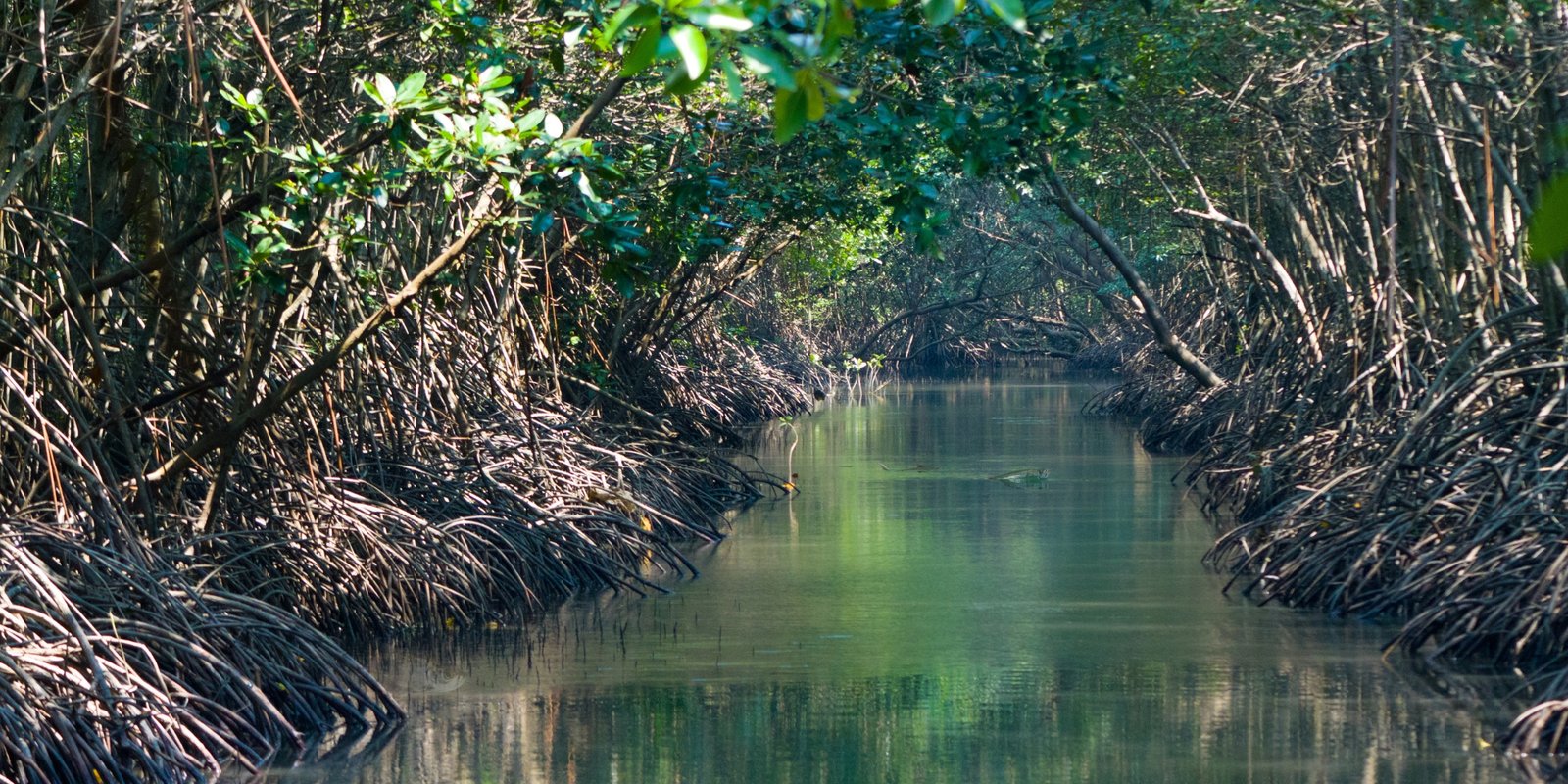
Juvenile tarpon depend on mangrove backwaters and tidal creeks as critical nursery habitat. Bonefish & Tarpon Trust | BTT Juvenile Tarpon Habitat Initiative
Juvenile tarpon can tolerate low-oxygen environments by gulping atmospheric air at the surface. Florida Museum | Florida Museum — Atlantic Tarpon Biology
Research shows juvenile tarpon use habitats ranging from freshwater to full-strength seawater. ResearchGate | Tarpon Life-History Research
Habitat quality can strongly influence juvenile tarpon growth rates and survival. Bonefish & Tarpon Trust | BTT — 5 Things We Know About Juvenile Tarpon
More than 65% of angler-reported juvenile tarpon nursery sites studied by BTT were classified as altered. Bonefish & Tarpon Trust | BTT Juvenile Tarpon Research
Scientists are studying juvenile tarpon in both natural and managed coastal marsh habitats to better understand nursery use. ResearchGate | Juvenile Tarpon Marsh Habitat Study
Juvenile tarpon depend on mangrove backwaters, wetlands, tidal creeks and coastal ponds as nursery habitat. Bonefish & Tarpon Trust | BTT Juvenile Tarpon Habitat Initiative
Calm water, low dissolved oxygen, vegetative cover and mixed shallow/deep water are common features of juvenile tarpon habitat. Bonefish & Tarpon Trust | BTT Juvenile Tarpon Habitat Connectivity
More than 65% of angler-reported juvenile tarpon sites examined by BTT were classified as altered or degraded. Bonefish & Tarpon Trust | BTT Juvenile Tarpon Habitat Initiative
Juvenile tarpon can use low-oxygen nursery waters because their modified swim bladder allows them to breathe atmospheric air. Bonefish & Tarpon Trust | BTT: 5 Things We Know About Juvenile Tarpon
BTT research suggests habitat quality can strongly affect juvenile tarpon growth, survival and movement. Bonefish & Tarpon Trust | BTT Juvenile Tarpon Research Report PDF
Habitat restoration projects are testing features such as deep refuge holes, tidal connections and restricted predator access to improve nursery habitat.
Bonefish & Tarpon Trust
BTT Juvenile Tarpon Habitat Initiative
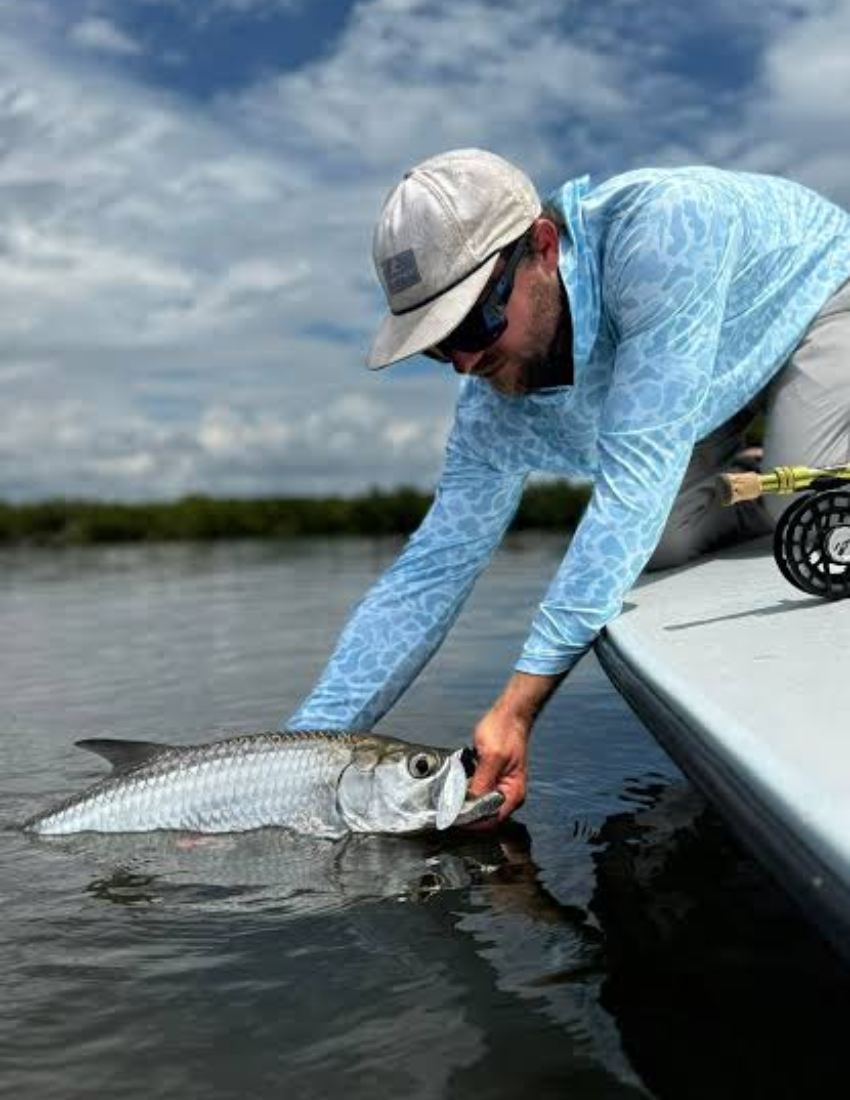
Juvenile tarpon are commonly found in Florida’s freshwater canals, rivers, estuaries and coastal backwaters. FWC | FWC Tarpon Profile
Florida juvenile tarpon tolerate a remarkably wide range of salinity, from freshwater to full-strength seawater. FWC | Tarpon Life-History Research
Mangrove-lined creeks and sheltered coastal wetlands provide important nursery habitat for young Florida tarpon. Bonefish & Tarpon Trust | BTT Juvenile Tarpon Habitat Initiative
Juvenile tarpon can survive low-oxygen Florida waters by gulping atmospheric air at the surface. FWC | FWC Tarpon Facts
South Florida habitats such as the Everglades and Big Cypress contain shallow, warm nursery waters used by small juvenile tarpon. ResearchGate | Tarpon Biology & Ecology Research
BTT is mapping and restoring juvenile tarpon nursery habitat in Southwest Florida, including degraded canal systems near Charlotte Harbor. Bonefish & Tarpon Trust | BTT Juvenile Tarpon Habitat Initiative
Juvenile tarpon have been scientifically studied in Puerto Rico’s mangrove estuaries, including Boquerón Bay. OUP Academic | Growth of Juvenile Tarpon in Puerto Rican Estuaries — ICES Journal
Research in Puerto Rico found juvenile tarpon arriving in estuaries at an average age of about 34 days. OUP Academic | Puerto Rico Juvenile Tarpon Growth Study — ResearchGate
Puerto Rico tarpon research suggests an extended spawning season, with peaks during spring and late summer. OUP Academic | ICES Journal — Growth of Juvenile Tarpon in Puerto Rican Estuaries
Scientists studied juvenile tarpon growth and nursery habitat inside the mangrove wetlands of southwestern Puerto Rico. proceedings.gcfi.org | Gulf & Caribbean Fisheries Institute — Juvenile Tarpon Ecology in Puerto Rico
Tagging studies in Boquerón found juvenile tarpon using mangrove mudflats when seasonal water connections linked them to adjacent lagoons. ResearchGate | Juvenile Tarpon Ecology and Tagging Research — ResearchGate
Puerto Rico’s mangroves provide nursery habitat, protection and feeding areas for juvenile fishes throughout coastal estuaries. Estuario de la Bahía de San Juan | San Juan Bay Estuary — Wildlife & Habitat