Coming Soon!
Come Back Soon...
This is Still Under Construction!
Join our FREE Community & Newsletter and we will Notify You when this is Up!
Explore our Tarpon Fishing Resources covering Baby Tarpon, Juvenile Tarpon, Tarpon Nursery Habitats, Tarpon Migration, Expert fishing techniques and field research.
And... We might even have One of the Best Tarpon "CATCHING" Sections on the Web...
FISH · TRAVEL · EXPLORE · WEAR IT
True fishery stewardship starts with an expert understanding of the silver king. Long before hitting the water, successful anglers study the ecosystem—tracking baby tarpon development, mapping hidden tarpon nursery habitats, and decoding complex tarpon migration routes across the Americas. Welcome to the central hub for our premium tarpon fishing resources. Here, we blend biological research with real-world angling strategy, analyzing how juvenile tarpon transition from backwater backcountry creeks into powerful, hard-fighting adult sportfish.
[ READ ON... ]


Master the silver king with definitive tarpon fishing resources.
Track baby tarpon in nursery habitats, decode adult tarpon migration, and map tidal patterns.
These Tarpon Fishing Resources connect habitat, tides, weather, migration and firsthand observation
to the decisions anglers make on the water. Read the guide to better understand where tarpon live,
Tarpon Dreams™ is building a growing collection of Tarpon Fishing Resources for anglers who want to understand more than where to cast. Catching tarpon consistently begins with understanding the fish, the habitat, the season, the water and the conditions that influence where tarpon are likely to be found.
Our resource library follows tarpon through the different stages of their lives, from Baby Tarpon and Juvenile Tarpon living in protected nursery environments to mature fish moving through coastal waters, passes, beaches, bays and migration corridors.
The goal is simple. Combine established tarpon research with practical fishing knowledge, firsthand field observations and destination-specific information that can actually help anglers become better prepared before they reach the water.
Whether you are planning your first tarpon fishing trip or have spent decades chasing them, there is always something else to learn.
Baby Tarpon are one of the most interesting parts of the tarpon life cycle.
Young tarpon can inhabit environments that look completely different from the open coastal waters where anglers often encounter mature fish. Mangrove creeks, backcountry ponds, canals, lagoons and other protected areas can provide important habitat for developing fish.
Juvenile Tarpon have several remarkable biological adaptations that help them survive in environments where other fish may struggle. Their ability to gulp atmospheric oxygen allows them to use warm, low-oxygen waters that can provide protection from some predators.
For anglers, understanding juvenile habitat creates an entirely different way of looking at the water.
Instead of simply searching for visible fish, we begin asking better questions.
Where does deeper water intersect with shallow nursery habitat? Where does moving water concentrate food? How do tides create access to or remove access from certain areas? Where can young fish find protection while still having opportunities to feed?
Those questions form the beginning of understanding Tarpon Nursery Habitats.
Tarpon Nursery Habitats are more than places where small tarpon happen to live.
Water depth, dissolved oxygen, temperature, salinity, tidal connectivity, available forage, vegetation and predator pressure can all influence how useful a particular habitat may be to juvenile fish.
These environments are also constantly changing.
Rain can alter salinity. Extreme tides can change access. Seasonal weather can move forage. Water temperatures can affect feeding behavior. Human development can modify or eliminate habitat entirely.
Tarpon Dreams™ will continue documenting nursery environments throughout Florida, Puerto Rico, Mexico, the Caribbean and other destinations within the Atlantic tarpon range.
Our objective is not to publish a collection of secret fishing spots. The objective is to better understand the types of environments tarpon use and why they use them.
That distinction matters.
Understanding habitat is transferable knowledge. A GPS coordinate is not.
Tarpon Migration is one of the most recognizable parts of the species' life history, but migration is more complicated than fish simply swimming north or south at a certain time of year.
Adult tarpon movements can be influenced by water temperature, spawning behavior, food availability, currents, seasonal weather and regional geography.
Different fisheries can also behave very differently.
A massive migrating tarpon traveling along an exposed coastline presents a completely different fishing problem from a resident fish using a protected lagoon, river, bay or harbor.
Understanding those differences helps traveling anglers set realistic expectations.
It also explains why asking for the single "best month for tarpon fishing" can produce an incomplete answer.
The better question is:
What type of tarpon experience are you trying to have?
Tarpon Dreams™ connects our Tarpon Migration resources with fishing calendars, destination research and firsthand field notes so anglers can match their expectations with the fishery they intend to visit.
Successful tarpon fishing is rarely about one variable.
Tide, current, wind, water temperature, clarity, depth, structure, forage and fishing pressure can interact to change a fishery throughout a single day.
Experienced anglers learn to recognize those relationships.
A location that appears empty at one stage of the tide may become productive when current begins moving. A shoreline that looks featureless at high water may reveal channels, potholes and transition zones at low tide. Bait movement can turn otherwise ordinary water into a temporary feeding zone.
That is why Tarpon Dreams™ puts so much emphasis on observation.
The objective is not merely to remember where a fish was caught.
The objective is to understand why that fish was there.
There is no single correct way to catch a tarpon.
Fly fishing, artificial lures, live bait and dead bait all have legitimate applications depending on the destination, conditions, fishery and angler.
Likewise, appropriate tackle changes dramatically when targeting small Juvenile Tarpon compared with adult migratory fish weighing more than 100 pounds.
Our Tarpon Fishing Resources will examine rods, reels, leaders, hooks, knots, flies, lures, bait systems, fish-fighting techniques and travel equipment without pretending that one approach belongs everywhere.
The best system is the one appropriate for the fishery, the fish and the conditions.
Responsible fish handling remains part of that equation.
Landing efficiency, proper tackle, minimal unnecessary handling and safe releases help reduce stress on a fish that may have traveled thousands of miles during its lifetime.
Tarpon Dreams™ is being built around firsthand exploration of important Atlantic and Caribbean tarpon destinations.
Florida represents extraordinary diversity, from juvenile backcountry fisheries to some of the world's most recognizable seasonal tarpon migrations.
Tarpon Fishing Puerto Rico offers something very different. Protected lagoons, urban fisheries, coastal waters and year-round opportunities can create an accessible introduction to tarpon fishing while also offering deeper opportunities for experienced anglers.
Mexico, the Bahamas and other Caribbean destinations introduce still more variations in habitat, fishing style, travel logistics and seasonal patterns.
That diversity is exactly why destination-specific research matters.
Information becomes far more valuable when it changes the way an angler observes the water.
That principle is becoming a central part of Tarpon Dreams™.
Observe → Predict → Execute → Record → Analyze → Refine
Observe the conditions.
Predict where the fish should be.
Execute the fishing plan.
Record what actually happened.
Analyze the results.
Refine the next decision.
Then repeat it.
Over enough days on the water, individual observations begin turning into recognizable patterns.
That is how fishing knowledge compounds.
This page is intentionally not finished. Neither is our understanding of tarpon.
The Tarpon Dreams™ Research Library will continue expanding as we fish new destinations, interview guides and researchers, document fisheries, review published science and add new field observations.
When scientific research supports a subject, we want to identify and link to those sources. When something represents a field observation or fishing theory, we want to make that distinction clear as well.
Our forthcoming Definitive Guide to Targeting Juvenile Tarpon will take this research substantially deeper, connecting tarpon biology, nursery habitats, feeding behavior, tides, weather, fishing techniques and destination research into a comprehensive system for understanding and targeting juvenile fish.
Until then, use the resources on this page as individual building blocks.
The Tarpon Dreams™ definitive tarpon fishing resources.
From Spawning, Larval Stage to Maturity. Plus a plethora of Fishing / Catching Tips, Tactics & More!
The Tarpon Dreams™ definitive tarpon fishing resources.
Juvenile Tarpon: The Atlantic & Caribbean Field Guide
Biology, Habitat, Water Reading, Tactics, Travel, and Conservation Across Nine Tarpon Dreams Destinations
MORE INTERNAL RESOURCES
EXTERNAL RESOURCES
YOUR Trip Starts Here!
We believe the best trips are about more than fishing.
The Best Trips are about the people, the places,
and the memories you take home.
Sometimes you even wear the memories!
And  shhh... The Fish Matter Too!
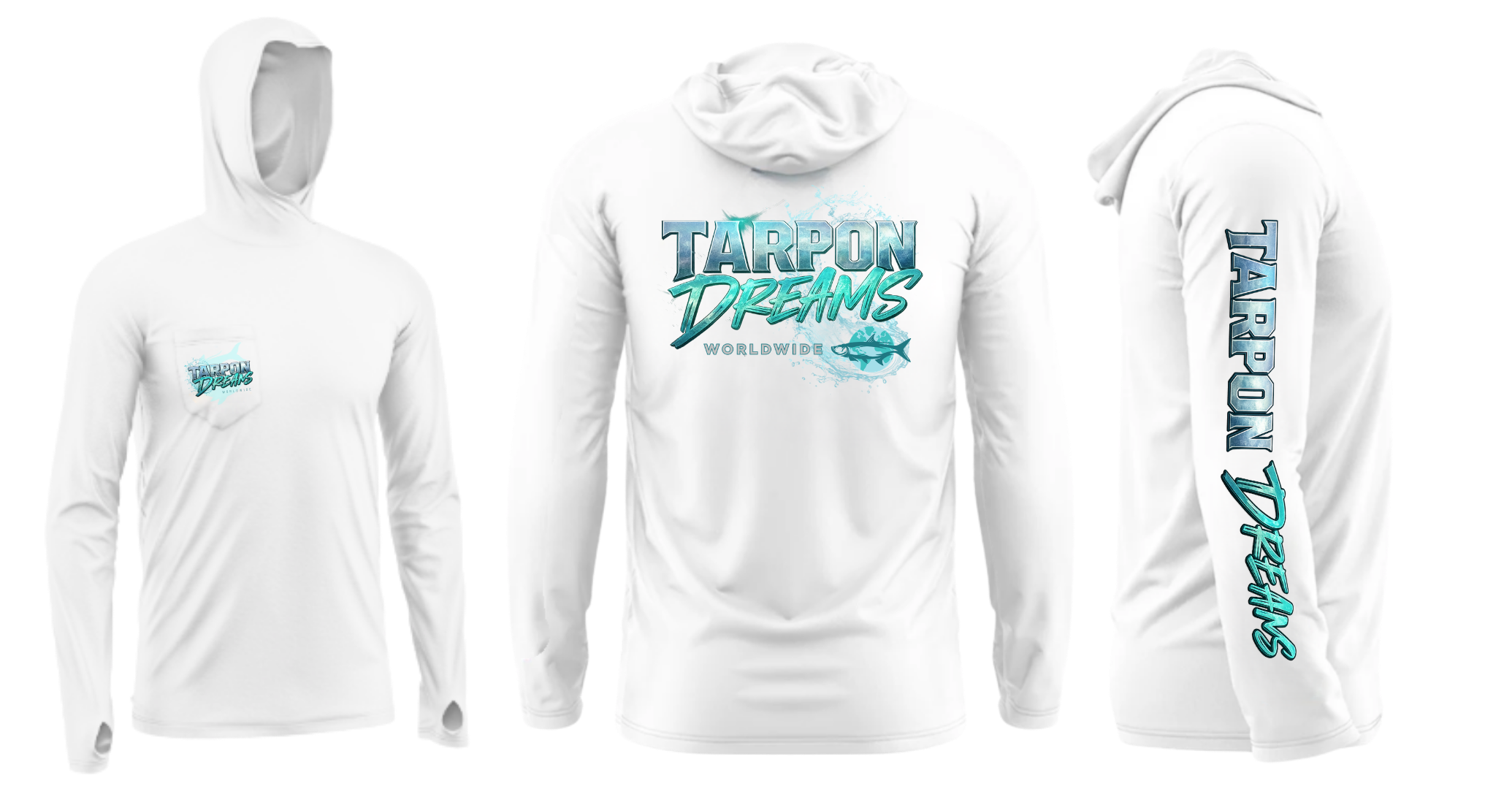
Hats, Buffs, T-Shirts, Hoodies, Shorts, Flip-Flops & More!